La vidéo de notre session sur les JECO avec Charlotte Cavaillé, Emeric Henri et Régis Sauder se trouve ici:

.com
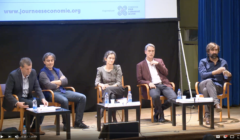
La vidéo de notre session sur les JECO avec Charlotte Cavaillé, Emeric Henri et Régis Sauder se trouve ici:

Le « risque d’une abstention élevée »
Chaque candidat à une élection sait très bien qu’il doit convaincre les électeurs non seulement de le préférer aux autres, mais aussi de se déplacer pour voter. Quel est le risque que ce deuxième tour des présidentielles soit décidé davantage par la paresse relative des électeurs que par leurs préférences ? Ou par une abstention de principe de la part de ceux dont les candidats préférés ont été éliminés ?
L’avis est souvent exprimé que le résultat du référendum sur le Brexit et la victoire de Donald Trump ont été le résultat d’un abstentionnisme prononcé dans le camp des vaincus. Selon des enquêtes menées après le résultat, seulement 64 % des électeurs âgés de 18 à 24 ans ont voté lors du référendum britannique, comparés à 90 % de ceux âgés de plus de 65 ans. Puisque les jeunes étaient beaucoup plus opposés à la sortie de l’Union européenne (UE) que les personnes âgées, peut-on en déduire que leur abstention a été la cause principale du résultat ?
Il est difficile de le savoir en réalité. Car les données électorales nous permettent de connaître le résultat total par circonscription électorale, mais pas les caractéristiques individuelles de chaque votant. On ne sait pas dans quelle mesure une baisse du vote pour Hillary Clinton dans une circonscription donnée par rapport au vote pour Barack Obama quatre ans auparavant a été le résultat d’un transfert vers Donald Trump du vote d’électeurs qui avaient soutenu Obama, ou de la baisse de participation des partisans d’Obama, ou d’une hausse de la participation de partisans des républicains.
Seuls les sondages permettent d’associer ces caractéristiques personnelles à une décision de voter, ou de s’abstenir. Mais au RoyaumeUni comme aux EtatsUnis, les sondages ont eu peu de valeur prédictive du résultat final. On peut remettre en cause non seulement la représentativité de ceux qui répondent aux sondages, mais aussi la fiabilité de ce qu’ils ont raconté aux sondeurs.
Variation du niveau de participation
Pourtant, une étude parue le 5 avril nous éclaire partiellement sur le rôle de l’abstention dans le référendum sur le Brexit (« Who Voted for Brexit ? (http://cep.lse.ac.uk/pubs/download/dp1480.pdf) A Comprehensive DistrictLevel Analysis », par Sascha Becker, Thiemo Fetzer and Dennis Novy, Discussion Paper n° 11954, Centre for Economic Policy Research). Cette étude n’a pas encore été validée par un comité de lecture, mais elle fait plusieurs constats importants.
Le premier est que la tendance des circonscriptions à voter pour le « Leave » (la sortie de l’UE) n’est expliquée que très faiblement par des facteurs liés à l’UE – comme l’ouverture au commerce européen ou la présence de migrants. Les facteurs explicatifs sont surtout un niveau faible d’éducation et de revenus, et une dépendance historique envers l’économie manufacturière.
Ces facteurs sont également associés à la variation du niveau de participation électorale, mais pas toujours dans le sens qui pourrait expliquer le résultat. La participation a certes été plus élevée dans les circonscriptions où il y a davantage d’électeurs âgés et de tendance conservatrice, et elle a été plus basse dans les zones de haut chôm
age ou de faibles revenus.
Mais les auteurs nous mettent en garde contre l’hypothèse d’un résultat déterminé par la faible participation des jeunes. La raison est simple : les électeurs âgés de 18 à 24 ans ne constituent que 11,3 % de l’électorat. Pour combler les presque quatre points d’écart entre le « Leave » (51,9 %) et le « Remain » (48,1 %), il aurait fallu que leur taux d’abstention tombe… à moins de zéro !
Ce constat ne devrait pas nous rassurer quant au risque d’une abstention élevée au deuxième tour de la présidentielle française. D’autant que la situation est très différente : les électeurs dont le candidat préféré ne sera pas au second tour constitueront plus de 50 % du total. Dans le cas d’une campagne serrée entre les deux candidats du second tour, chaque abstention pourra être considérée comme un demi-vote pour le gagnant final. Et même les demi-votes, ça s’accumule…
Paru dans Le Monde du 26 avril 2017.

Just published in Archives de Sciences Sociales des Religions 175 (2016), pp. 201-219.
The pdf is here.
My review of Gillian Tett’s book has appeared in the Times Literary Supplement.

This review, of Layard and Clark’s Thrive and William Davis’s The Happiness Industry, has appeared in the Times Literary Supplement.
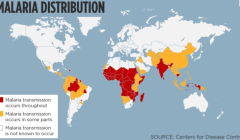
This paper, joint with Alice Mesnard, is forthcoming in the Journal of Demographic Economics, and the uncorrected proof is available here.
Abstract:
This paper models how migration both influences and responds to differences in disease prevalence between cities and shows how the possibility of migration away from high-prevalence areas affects long-run steady state disease prevalence. We develop a dynamic framework where migration responds to the prevalence of disease, to the costs of migration and to the costs of living. The model explores how pressure for migration in response to differing equilibrium levels of disease prevalence generates differences in city characteristics such as land rents. Competition for scarce housing in low-prevalence areas can create segregation, with disease concentrated in high-prevalence “sinks”. We show that policies affecting migration costs affect the steady-state disease prevalence across cities. In particular, migration can reduce steady-state disease incidence in low-prevalence areas while having no impact on prevalence in high-prevalence areas. This suggests that, in some circumstances, public health measures may need to avoid discouraging migration away from high-disease areas.

This article (joint with Pierre Dubois, Olivier de Mouzon and Fiona Scott Morton), has now appeared in the Rand Journal of Economics, and is available under Open Access.
Abstract:
This article quantifies the relationship between market size and innovation in the pharmaceutical industry using improved, and newer, methods and data. We find significant elasticities of innovation to expected market size with a point estimate under our preferred specification of 0.23. This suggests that, on average, $2.5 billion is required in additional revenue to support the invention of one new chemical entity. This magnitude is plausible given recent accounting estimates of the cost of innovation of $800 million to $1 billion per drug, and marginal costs of manufacture and distribution near 50%.

This article, joint with Samuele Centorrino, Elodie Djemai, Astrid Hopfensitz and Manfred Milinski, has now appeared in Adaptive Human Behavior and Physiology, and is available under Open Access.
Abstract:
We develop a theoretical model under which “genuine” or “convincing” smiling is a costly signal that has evolved to induce cooperation in situations requiring mutual trust. Prior to a trust interaction involving a decision by a sender to send money to a recipient, the recipient can emit a signal to induce the sender to trust them. The signal takes the form of a smile that may be perceived as more or less convincing, and that can be made more convincing with the investment of greater effort. Individuals differ in their degree of altruism and in their tendency to display reciprocity. The model generates three testable predictions. First, the perceived quality of the recipient’s smile is increasing in the size of the stake. Secondly, the amount sent by the sender is increasing in the perceived quality of the recipient’s smile. Thirdly, the expected gain to senders from sending money to the recipient is increasing in the perceived quality of the recipient’s smile.
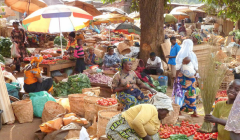
This article, joint with Guido Friebel and Jibirila Leinyuy, has appeared in World Development, April 2015 (pages 124-135) and is available here.
Abstract:
We show that in family or household firms, credit constraints can make business investment a direct competitor to educational investment. We test this theory on data collected in Cameroon. Households that are not restricted by credit constraints invest more in education when demand for the product they produce and sell increases. However, credit-constrained households react in the opposite way: when demand increases, they invest less in education, as predicted by our theory. We obtain these results controlling for endogeneity of family size, of demand conditions, and credit constraints.
The title of the paper has the following origin. The composer’s father, Franz Theodor Schubert, ran a school which he had taken over and reformed to make it more attractive to middle-class parents. Franz Theodor obliged his son to work in the school as a teacher for some years rather than to try his luck as a professional musician. To what extent this was because the father could not afford to invest in his son’s musical career (the hypothesis of our paper) or because he could not find a good substitute for his son’s teaching skills on the open market we are not in a position to say. Suffice it to say that the composer eventually broke free of this constraint and went on to work as a musician and composer, including as the teacher of Count Esterhazy. The rest of the story, as they say, is history – but we would like to claim that it is also economics.

This paper by Samuele Centorrino, Elodie Djemai, Astrid Hopfensitz,Manfred Milinski and me has now appeared in Evolution and Human Behavior.
The link is here:
Abstract:
We test the hypothesis that smiles perceived as honest serve as a signal that has evolved to induce cooperation in situations requiring mutual trust. Potential trustees (84 participants from Toulouse, France) made two video clips averaging around 15 seconds for viewing by potential senders before the latter decided whether to ‘send’ or ‘keep’ a lower stake (4 euro) or higher stake (8 euro). Senders (198 participants from Lyon, France) made trust decisions with respect to the recorded clips. If money was sent to the trustee, stakes were tripled and trustees could decide to keep all, two thirds or one half of the tripled stakes. Clips were further rated concerning the genuineness of the displayed smiles. We observe that smiles rated as more genuine strongly predict judgments about the trustworthiness of trustees, and willingness to send them money. We observe a relation between costs and benefits: smiles from trustees playing for higher stakes are rated as significantly more genuine. Finally, we show that those rated as smiling genuinely return more money on average to senders. An increase of one standard deviation in rating of smile genuineness is associated with an unconditional expected gain of about one dollar and thirty cents to senders in the two trials of the experiment. Potential gains for senders could be significantly increased from taking smiles rated as genuine into account.
Our theoretical paper, entitled “A Model of Smiling as a Costly SIgnal of Cooperation Opportunities”, has now been published, in Adaptive Human Behavior and Physiology, and is available here. Here is the abstract:
We develop a theoretical model under which “genuine” or “convincing” smiling is a costly signal that has evolved to induce cooperation in situations requiring mutual trust. Prior to a trust interaction involving a decision by a sender to send money to a recipient, the recipient can emit a signal to induce the sender to trust them. The signal takes the form of a smile that may be perceived as more or less convincing, and that can be made more convincing with the investment of greater effort. Individuals differ in their degree of altruism and in their tendency to display reciprocity. The model generates three testable predictions. First, the perceived quality of the recipient’s smile is increasing in the size of the stake. Secondly, the amount sent by the sender is increasing in the perceived quality of the recipient’s smile. Thirdly, the expected gain to senders from sending money to the recipient is increasing in the perceived quality of the recipient’s smile.